A Little History
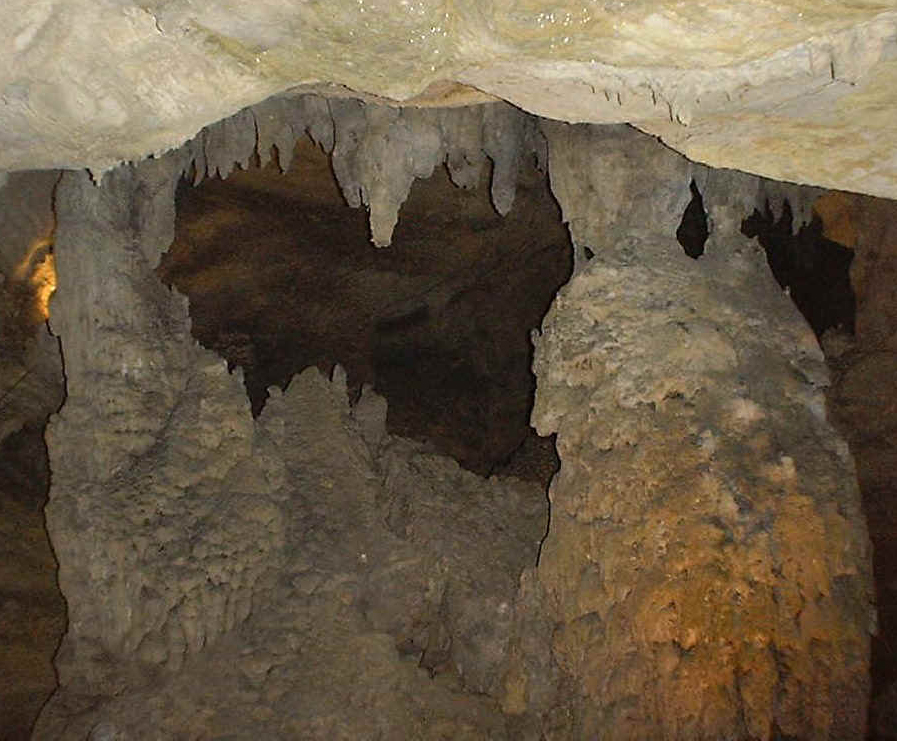
Archaeological evidence released in February of 2006 revealed that the caverns
were used by Early Woodland Native Americans over 1300 years ago. The
archeologists found burnt firewood located in a fire pit that has been
radiocarbon dated to 675 A.D. They also found pottery, arrowheads, and
other evidence of habitation.
The log cabin located on the property was discovered to have been built in
1777. Historical documents located in the Sullivan County Archives indicate the
caverns and cabin were used as a stopover point and shelter during the harsh
winter months as they were making their way westward. Due to the size of the
cavern it could handle housing larger groups of people and because of the wind
flow, fires could be built for heat and cooking. With the abundance of bat dung
(an important ingredient in the making of gunpowder at the time) and the fairly
consistent temperature, this made the cavern a good place to stay when the
weather was cold.
Historic families such as the Boones and the Crocketts, along with other less
known but very important key pioneers, were tied to the property and the
caverns. During the American Revolution as well as the War Between the States,
the availability of the bat dung was important for gunpowder as well as it
being used by the settlers as a place to store their goods during the harsh
winters. Prior to the Revolution, the British paid a 100 pound bounty for the
production for the first 100 lbs. of gun powder. The flints found in the
cavern were French and British which points to that time period when soldiers
from both sides were using the cave as a shelter. There were iron works nearby
and the salt peter as well as the craftsmen to make the guns were all
located near here.
According to several historians, the caverns have been used by mankind from the
earliest times man set foot on what now is one of the greatest
countries on earth. The importance of the name the cave was given ties to
William Linville, a land agent for Lord Granville who served the King of
England. With such pioneers and trailblazers having ties to the cavern many may
say this was yet another point leading into the new world and the westward push
began. In their time, the cave served as a good place to winter and a
safe place to avoid your enemy. Our Native Americans had already set up a
community and the settlers used many of their ways to survive. The cavern is
warm in the winter and cool in the summer when compared to the outside.
The historic evidence continues to flow out through research. The cavern was
used as a hideout for troops during the wars that covered this land. In
addition to previously mentioned uses, it has also served as a hospital
to treat the wounded, and later on, the cavern was used to produce moonshine.
With the flowing water and great ventilation it was an ideal location..
|